

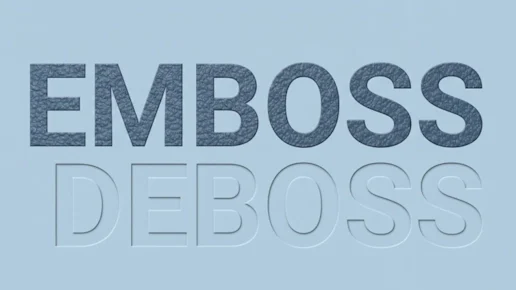
Embossing and debossing are popular printing methods used to create texture and depth on packaging, cards, and other printed materials. These techniques give a raised or pressed effect, making designs more eye-catching and professional. Both methods are often used for luxury packaging, business cards, stationery, and book covers.
Embossing vs Debossing
Let’s look at the difference between embossing and debossing:
Embossing raises a design on the surface, creating a lifted effect. It gives a premium texture that makes your logo or text stand out.

Debossing does the opposite; it presses the design into the surface, creating a sunken or engraved look.

In short, embossing pops out, while debossing goes in.
Both techniques can be combined with foil stamping, spot UV, or ink printing to make the design more attractive and professional.
Process of Embossing and Debossing
Here’s a step-by-step process of embossing and debossing:
1. Design & Die Creation
- First, create the artwork (logo, text, pattern) you want to emboss or deboss.
- Then, a metal die is made, a raised die for embossing, and a recessed die for debossing.
2. Counter-Die Production
- The counter die is the matching piece that holds the other side of the material.
- When the die and counter die press together, the design is formed.
3. Material Preparation
- Choose the material to be stamped: paperboard, cardstock, or another type.
- If using foil stamping, the foil is placed between the material and the die.
4. Setting Up Press
- Mount the die and counter-die into the embossing press.
- Adjust temperature, pressure, and alignment to match your material and design.
5. Embossing / Debossing Action
Run the material through the press:
- Embossing: the die pushes the material outward to form a raised design.
- Debossing: the die presses inward to form a sunken design.
6. Quality Check & Adjustments
- Check the impression, depth, clarity, and edges.
- Make adjustments (pressure, temperature, die sharpness) if the result is too light or too deep.
7. Finishing Touches
- You can combine it with printing, varnish, spot UV, or foil highlights for a more high-end look.
8. Final Packaging
- Check all embossed or debossed items.
- Pack them carefully so the embossed or debossed areas are not crushed.
Why Choose Embossing and Debossing
Here’s why embossing and debossing are widely used in packaging and branding:
- Adds Texture and Depth: It gives your product a smooth, tactile finish.
- Improves Brand Image: A raised or pressed logo looks professional and high-end.
- Works with Foil Stamping: Combine it with gold foil stamping, silver foil, or holographic foil stamping for an even more striking effect.
- No Ink Needed: These methods create an elegant design through pressure alone.
- Durable and Elegant: The design lasts long and adds a touch of luxury to your packaging.
Whether it’s for custom boxes, invitations, or business cards, embossing and debossing give your brand a polished, memorable look.
Conclusion
Embossing and debossing bring a premium touch to any printed design. They add texture, style, and depth that plain printing can’t match. Whether you choose raised embossing or indented debossing, both make your packaging feel more elegant and professional.
If you want your brand to look unique, embossing and debossing printing are excellent choices for your next packaging project.
